Delivery cost is always a variable that directly impacts the effectiveness and scalability of Facebook advertising campaigns. Facebook ads cost per 1000 impressions is considered a metric reflecting competition levels, audience quality, and the system’s budget distribution method. When CPM rises, the challenge lies not only in the bid price but also in relation to campaign objectives, ad set structure, content relevance, and user behavior after encountering the ad.
Instead of focusing solely on the CPM figure, advertisers need to place Facebook ads cost per 1000 impressions in correlation with CTR, conversion rates, and cost per final result. Only by evaluating the entire data chain from impression to conversion can a campaign be optimized sustainably and provide a basis for accurate decision-making.
CPM directly impacts Facebook advertising performance
CPM is not merely a cost metric but also reflects delivery quality, competition levels, and the ability to reach the target audience of the entire Facebook advertising campaign. When CPM fluctuates, the overall performance of the ad almost always changes accordingly, from reach and frequency to the ability to scale the budget.
What is CPM?
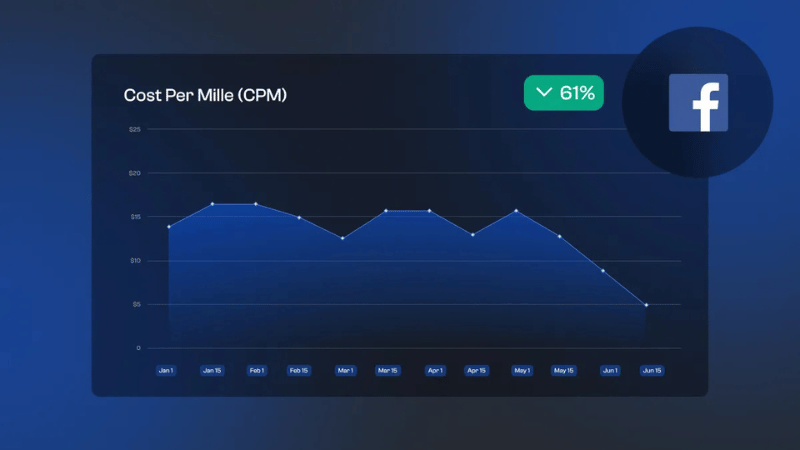
CPM (Cost Per Mille) is the cost an advertiser pays for every 1,000 ad impressions on Facebook. This is a core metric in the auction mechanism used by Facebook to compare and distribute ads among advertisers targeting the same audience group. The lower the CPM, the more optimized the cost of reaching users; conversely, a high CPM is usually accompanied by high competition or poor ad quality signals.
In operational practice, CPM reflects how Facebook evaluates your ad compared to others in the same segment. Campaigns with relevant content, good engagement rates, and stable account histories are often prioritized for delivery at a lower CPM, even if the budget is not superior.
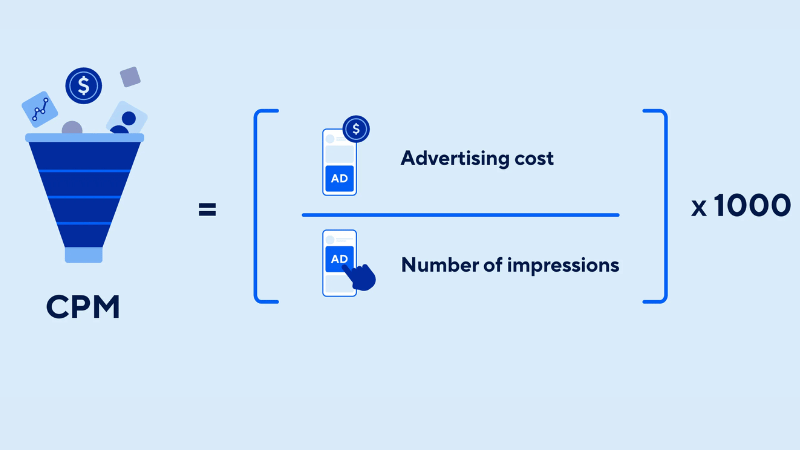
CPM is calculated based on the following formula: (Total ad cost / Total impressions) x 1000 = CPM. This formula allows advertisers to convert every campaign to the same cost basis, regardless of whether the objective is brand awareness, engagement, or conversion.
A point to note is that CPM does not exist independently. Facebook calculates CPM based on many factors simultaneously, including target audience competition, ad quality scores, estimated action rates, and the delivery context. Therefore, two campaigns with the same budget but different content or audiences can still generate vastly different CPMs.
Reasonable CPM rates on Facebook
There is no standard CPM figure applicable to every industry; however, reasonable thresholds can be determined based on common operational data. For mass industries such as retail, consumer services, or education, CPM usually fluctuates at an average level and remains relatively stable if the campaign structure is built correctly. When CPM spikes, the cause often stems from an overly narrow audience, irrelevant ad content, or periods of high competition.
In sectors with strict content control requirements or high competition, a high CPM is not always a negative sign. What matters is whether that CPM generates quality traffic and contributes positively to deeper metrics such as CTR, CPA, or ROAS.
General/Mass-market sectors with broad demand (fashion, mass cosmetics, F&B, household goods, basic education)
- Good CPM: 0.8 – 1.8 USD
- Acceptable CPM: 1.8 – 2.8 USD
- High CPM, optimization needed: > 2.8 USD
E-commerce & DTC groups (Online shops, direct-to-consumer brands, mid-priced products):
- Good CPM: 1.2 – 2.4 USD
- Acceptable CPM: 2.4 – 3.6 USD
- High CPM: > 3.6 USD
Service & Lead groups (Real estate, dentistry, aesthetics, insurance, finance):
- Good CPM: 1.8 – 3.2 USD
- Acceptable CPM: 3.2 – 4.8 USD
- High CPM: > 4.8 USD
B2B – Specialized products/services (SaaS, software, business solutions, premium training):
- Good CPM: 2.8 – 4.8 USD
- Acceptable CPM: 4.8 – 7.2 USD
- High CPM: > 7.2 USD
Sensitive / Heavily moderated industries (Crypto, forex, high-risk finance, grey dropship):
- Common CPM: 4.8 – 10 USD
- CPM below 4 USD: Very rare, difficult to sustain
How important is CPM for Facebook advertising?
CPM directly affects the ability to scale advertising. When CPM is low and stable, budgets can be increased gradually without distorting the delivery structure. Conversely, high CPM causes reach costs to rise quickly, slowing delivery speed and limiting the ability to test new content or audience segments.
Furthermore, CPM serves as an early indicator of campaign health. An increase in CPM is often accompanied by signs of audience saturation, high frequency, or content that no longer resonates with user behavior. If these changes are not addressed promptly, they will lead to a decline in other performance metrics.
CPM cannot be evaluated in isolation but must be placed in correlation with CTR, CPC, and conversion rates. A low CPM with poor CTR indicates that the ad is delivered cheaply but is not attractive enough. Conversely, a high CPM with good CTR and stable conversion rates can still yield positive business results.
During the optimization process, CPM helps advertisers correctly identify whether the problem lies in delivery or content. When CPM increases, but CTR remains the same, the cause usually stems from market competition. When CPM increases while CTR decreases, the issue often originates from the ad message or audience relevance. This provides the basis for making accurate adjustments rather than intuitive optimization.
Key factors affecting cost per thousand impressions on Facebook
The cost per thousand impressions on Facebook does not form randomly, nor does it depend on a single variable. CPM is the aggregated result of multiple signal layers that Meta’s advertising system continuously evaluates during the delivery process.
Competition level in the ad auction
Facebook operates on a real-time auction mechanism, where every impression is determined by the number of advertisers currently targeting the same audience group. When competition increases, CPM is almost certainly driven up. This often occurs in industries with high profit margins, long customer lifecycles, or during peak sales periods.
Practice shows that within the same industry, CPM can fluctuate sharply by season, not due to changes in ad content but because the number of accounts participating in the auction spikes. Facebook prioritizes delivery for ads willing to pay a higher price or those providing a better user experience, causing display costs to be directly affected by competitive pressure.
Quality and relevance of ad content
Meta’s algorithm continuously measures user reactions to each ad. Dwell time on the post, video view rates, organic engagement, and subsequent behavior after seeing the ad are all quality assessment signals. When content generates genuine interest, the system tends to deliver more at a lower cost.
In operational practice, ads ignored by users from the first second often have high CPMs even with small budgets. Conversely, ads that maintain good attention time often receive delivery discounts from the platform. This is why, for the same audience, CPM between different ads can vary significantly.
CPM is strongly influenced by whether the ad message matches the expectations and needs of the targeted group. When Facebook notices an ad is frequently shown to people who rarely respond positively, the system views this as an inefficient delivery signal and adjusts costs unfavorably.
Actual data shows that targeting too narrowly or deviating too far from the message causes CPM to rise rapidly, as the system must “work harder” to find suitable people within a limited user set. Conversely, a clear message that makes it easy for the right audience to recognize themselves from the first impression usually helps CPM remain more stable during the budget scaling Facebook ads process.
Ad formats and content consumption behavior
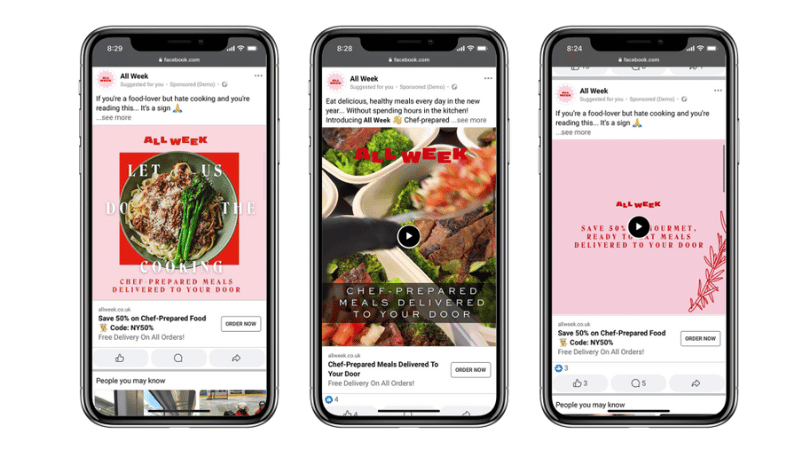
Each ad format provides a different experience for users and is delivered by the algorithm with its own evaluation mechanism. Short videos, full-screen vertical content, or formats with motion elements often generate longer engagement times, thereby positively impacting CPM. Meanwhile, static formats lacking highlights often struggle to hold attention.
Different placements (Feed, Stories, Messenger, etc.) have different costs. Prime placements like the Facebook feed and Instagram Stories usually have higher CPMs due to high competition and engagement.
Observation at the account level shows that with the same message, when deployed in different formats, CPM can change markedly. This does not come from bidding costs but from how users consume content, causing the algorithm to adjust delivery priorities.
Account trust score and delivery history
Facebook does not evaluate CPM in a vacuum; it is tied to the operational history of the ad account, fanpage, and payment method. Accounts with stable delivery histories, few policy violations, and low ad rejection rates often enjoy “smoother” delivery, leading to more controllable CPM.
Conversely, accounts that have been restricted, have payment interruptions, or have high complaint rates often record high CPMs right from the initial stages of running ads. This is a fundamental factor that impacts display costs silently, but in the long term.
Optimizing and reducing CPM in Facebook ad campaigns
To control display costs and improve overall performance, optimizing CPM cannot be separated from how Facebook evaluates the quality of the user experience with the ad. The algorithm prioritizes content that makes viewers stop, interact, and continue using the platform.
Optimizing CPM with ad images
In the process of operating hundreds of ad accounts across various industries, it can be observed that the Facebook algorithm responds more positively to images that feel “natural” and are visually pleasant. Blue and green tones, skies, and trees appear repeatedly in ads with low and stable CPM.
Images taken in natural environments often achieve significantly better display costs compared to product photos on flat white or studio backgrounds. This does not stem from pure aesthetics but is directly related to the time users spend on the ad, a vital signal in Facebook’s delivery system.
Visual depth is a factor often overlooked but strongly affects the ability to “stop the scroll.” An image with a clear subject, distinct foreground and background, and a sense of real space will hold the gaze longer than a completely flat composition.
When users spend a few extra fractions of a second observing, the algorithm records that the ad provides a good experience and prioritizes delivery at a lower CPM. This is why many lifestyle ads, even without overly complex content, maintain stable CPM over long periods.
For infographic-style ads with text, the design should avoid the feeling of a “static poster” lacking highlights. Creating layers for content helps images have depth and a clear sense of relief. Shadows for text increase background separation, gradients instead of flat colors help image surfaces have natural transitions, and 3D layouts make ads look more like a real shot than a graphic design. These adjustments are not for beauty purposes but to prolong the time viewers passively interact with the ad, a factor that directly improves CPM.
Headline, caption, and the ability to call out the right audience
Images only hold viewers for the first moment; text content determines whether they stay or leave. Users need to understand immediately what the ad is selling, what problem it is solving, or who it is speaking to.
When the message is not clear enough, they leave very quickly, and this happens even with actual potential customers. High early abandonment rates cause Facebook to judge the ad as ineffective and drive CPM higher.
A headline or opening caption needs to do at least one of three things: state the problem directly, clearly identify the product, or call out the target group directly. Naming the audience—for example, by geographic location or specific context—helps suitable people realize the ad is for them from the first second. Irrelevant people will skip faster, but this helps the algorithm learn quickly and filter the audience more accurately, thereby improving CPM over time.
The first sentence of the caption acts as a delivery orientation signal. When the message is clear enough and consistent with the image, Facebook easily identifies the group of people likely to be interested and optimizes display costs for that group. The CPM decrease in this case is not due to “price squeezing” but because the ad is delivered to the right person from the start.
Engagement, sharing, and the impact on CPM
Engagement metrics such as likes, comments, saves, and especially shares all positively impact CPM. Among them, sharing is the strongest signal because it shows the content is valuable enough for users to proactively spread it. However, calling for direct engagement within an ad is a policy violation and carries a risk of delivery restriction. Sustainable CPM only comes when engagement occurs naturally.
In campaigns where the customer group has strong social ties, the sharing capability is often higher than average. A marathon ticket sales campaign that achieved a CPM of about 5 USD for the Purchase objective, a ROAS of 5.64, and revenue of 7,600 USD did not come from complex technical optimization but from the ad being shared continuously within the runner community. When viewers not only consume content but also actively spread it, Facebook views it as a high-quality signal and prioritizes delivery at a lower cost.
In markets where customers know many other customers, CPM tends to decrease faster if the content hits the right community context. This shows that optimizing CPM does not lie in a single trick but is the result of a combination of images with depth, clear messaging, and the ability to create a natural social reaction from viewers.
Frequently Asked Questions
No. A high CPM only reflects competition and audience quality; it does not directly reflect business performance. In many industries, especially finance, real estate, premium education, or high-value products, a high CPM is a consequence of Facebook delivering ads to a group of people with high purchasing power. If the CTR and conversion rates are proportionate, a high CPM still generates good ROAS. The problem only arises when a high CPM is accompanied by a low CTR and short engagement time; at that point, the Facebook ads cost per 1000 impressions truly becomes a burden.
Running traffic or awareness to achieve a low CPM only makes sense when the goal is brand coverage or collecting behavioral data, not profit optimization. The low CPM in these campaigns often comes from a less competitive but also less likely-to-purchase group of people. When switching to a sales campaign, CPM usually increases again because Facebook must find people with actual intent to buy. Therefore, instead of running cheap objectives to “nurture the account,” focus on improving creative quality and messaging within the sales campaign itself. A low CPM but for the wrong audience will not help reduce Facebook ads cost per 1000 impressions sustainably for business operations.


