In 2026, Facebook advertising is no longer a game of large budgets or short-term tricks, but a comprehensive challenge involving strategy, data, and the ability to adapt to Meta’s increasingly intelligent algorithm. Ad optimization goes beyond just adjusting targeting or lowering CPC; it is closely related to content, user experience, account quality, and how you build a sustainable advertising system. In the article below, Optimal Agency will analyze the most effective Facebook advertising optimization method for 2026 and how to leverage Meta’s new AI features for your campaigns. Follow along!
Andromeda: Meta’s proprietary machine learning system (New 2026)
Stepping into 2026, Meta officially ramps up Andromeda, the next-generation backend machine learning system for Facebook and Instagram ads. This is not just a typical algorithm upgrade, but Meta’s way of completely redefining how ads are matched with user behavior in real-time. If advertisers correctly understand and effectively utilize Andromeda, we believe that ROAS (Return on Ad Spend) can significantly increase due to the platform’s increasingly accurate ability to “read” purchase intent.
How does Andromeda operate in the Meta advertising ecosystem?
According to Meta’s announcement, Andromeda is designed to match the most suitable ad creative with the user, precisely at the moment they are most ready to take action. It goes beyond demographics or interests; this system focuses on in-depth analysis of the user’s behavior, context, and position in the customer journey.
In other words, Andromeda helps Meta understand what content the user wants to see, what stage of the decision-making process they are in, and which ad creative is most likely to generate a conversion for your business. This is why optimizing creative and campaign structure is becoming increasingly critical.
The role of Advantage Plus in the Andromeda era
Currently, when you run objectives like Sales, Leads, or App Promotion, Meta has prioritized deploying the Advantage Plus campaign structure. With this structure, the system is given full authority to distribute ads to the user groups that Andromeda deems most suitable.
However, we always emphasize to advertisers that Advantage Plus is not a guaranteed “run-to-win” formula for all accounts. It still requires rigorous testing and close performance monitoring. For campaigns like Engagement, Meta has not yet fully applied Advantage Plus, but this is clearly the platform’s long-term direction. The most important thing is for you to understand which campaign structure is performing best at any given time, rather than mechanically applying a fixed formula.
Andromeda interprets user intent for advertising
To make it easier to visualize, we often use relatable examples for our clients. Suppose you are selling baking tools.
A mother posts a status on Facebook sharing how happy she is to see her son starting to learn how to bake. Meta identifies the family context, the maternal role, and positive emotions surrounding cooking instruction. If your account has an image ad creative featuring a young boy using baking tools, Andromeda will prioritize delivering that ad to this mother because the relevance level is very high.
Conversely, if a father posts an Instagram Story about the moment his wife and daughter are baking together in the kitchen, Meta understands this as an image of a happy family. In this case, an ad creative carrying a message about gifts for loved ones or family bonding is more likely to be displayed. Thanks to this ability to read context, Andromeda is delving deeper into users’ lives and accurately predicting what kind of ads they prefer and which message best aligns with their purchase intent.
Effective Facebook advertising optimization method 2026
Stepping into 2026, Facebook Ads is no longer a simple “turn on ads, get sales” game. The algorithm increasingly prioritizes systematic campaign structure, clear segmentation of customer groups, and tight control over the learning phase. With practical experience scaling with many large brands, we will share with you the most effective and sustainable Facebook ad optimization system currently in operation.
Establish foundational campaigns with prospecting CBO
When starting on a completely new ad account or resetting the system, the first thing we always do is create a Sales campaign focused 100% on new customers. This campaign is typically named Prospecting CBO for easy management and subsequent scaling.
The core point in the setup is the clear separation of audience groups: new customers, users who have engaged, and existing customers. Prospecting is only for people who have never interacted with the brand. Regarding budget, we use Campaign Budget Optimization (CBO) because this is the most critical campaign for scaling and typically accounts for about 80% of the total budget. For example, if your total ad budget is $1,000 per day, approximately $800 will be allocated to Prospecting CBO.
The bidding strategy is kept at the default Highest volume or Highest value to allow Facebook to optimize automatically. Furthermore, advertisers should enable Audience Segment Reporting in Advertiser Settings for Facebook to clearly distinguish groups that have engaged, site visitors, add to cart users, and lists of existing customers from the pixel or CRM, like Klaviyo.
Build Ad Sets using the standard Pack system to reach new customers
The Ad Set is where you decide who you are talking to and what creative you are using. We apply a modular pack system, suitable for over 95% of brands, from e-commerce to lead forms. Broad Pack 1 is the first default pack. The audience is kept completely broad, with no interests and no age restrictions unless mandated by the industry. The conversion objective is Purchase, and the attribution is typically set to 7-day click and 1-day view. The Ad Set has no budget limit, no scheduling adjustments, and uses all placements.
To ensure reaching only new customers, we always exclude site visitors (30 days), add to cart (90 days), and all purchasers. This way, Facebook clearly understands that the mission of this pack is to find completely new people, helping the CPM and CPA remain more stable when scaling.
Scale creative with Pack 2, Pack 3, without disrupting learning
Whenever there is a new batch of creative, we do not edit the old pack but create a completely new one, such as Broad Pack 2, Broad Pack 3. Each pack represents a separate creative testing cycle. This approach helps maintain the learning phase of well-performing packs, preventing Facebook from having to learn from scratch. A small but highly effective tip is to name the pack with the launch date, for example, Pack 2 – 01/2026, so the team can easily track performance over time.
Separate a dedicated Scale campaign for safe budget expansion
Scaling a campaign is not about haphazardly increasing the budget. We always create a separate Sales campaign for scaling, with an initial budget lower than the Prospecting CBO and at least equal to 1x the target CPA. The audience and exclusions remain the same as Prospecting. The difference lies in only introducing the best-performing ads into this campaign. The selection method involves reviewing Incremental Attribution, sorting by Amount Spent, and prioritizing ads that have both high spending and high Incremental ROAS. Then, we duplicate these ads into the Scale Campaign without needing to turn off the original ad.
Control Interest Ad Sets to supplement Broad targeting
In Prospecting, we sometimes add an interest Ad Set to explore audience segments “outside the system” compared to broad. This Ad Set maintains all settings, only changing the Detailed Targeting. A sports apparel brand might test the interest in Range Rover or other luxury car brands. Although the audience is still large, about 10 to 11 million people, the behavior and mindset are completely different from broad. A critical note is to only use winning creatives; do not test new creatives in the interest Ad Set.
Set spending limits for fair and effective creative testing
When launching a new pack, we always set an Ad Set Spending Limit instead of letting Facebook spend freely. The limit is usually converted from a percentage to USD and set at exactly 1x the target CPA. After about 4 to 7 days of running, if the Ad Set only spends the budget but does not meet the minimum metrics, we turn it off. Conversely, if it exceeds expectations, that pack will be kept and scaled further. This approach helps you test creatives fairly, avoiding the situation where “bad ads eat the budget of good ads.”
Build a retargeting campaign for effective conversion closure
Retargeting is created by duplicating the Scale Campaign and refining the audience. We usually divide it into several clear Ad Sets, such as site visitors (30 days), add to cart (90 days), and the group of engagers on Facebook and Instagram. For site visitors, we include people who have visited the website and exclude add to cart users and purchasers. For add to cart, we only include people who have added items to the cart and exclude those who have purchased. Broad expansion is always turned off to ensure accuracy.
Optimize Retention to maximize existing customers
The Retention campaign is where profitability is truly optimized. We duplicate from Retargeting and rename it Retention. Common Ad Sets are purchasers within 180 days and all-time purchasers, but excluding the last 180 days. This campaign is typically used for upsell, cross-sell, or recycling existing customers with a significantly lower CPA than Prospecting. If retention is executed well, the overall ROAS of the account will be clearly boosted, even when Prospecting is scaling aggressively.
Facebook advertising optimization in 2026 is no longer about adjusting a few parameters or arbitrarily increasing/decreasing the budget; it is a systematic operation encompassing campaign structure, budget allocation, creative management, and correct data measurement. When you build a stable foundation, test under controlled conditions, and scale based on actual performance, Facebook will become a sustainable growth channel rather than a risky “gamble.”
What is Facebook advertising optimization?
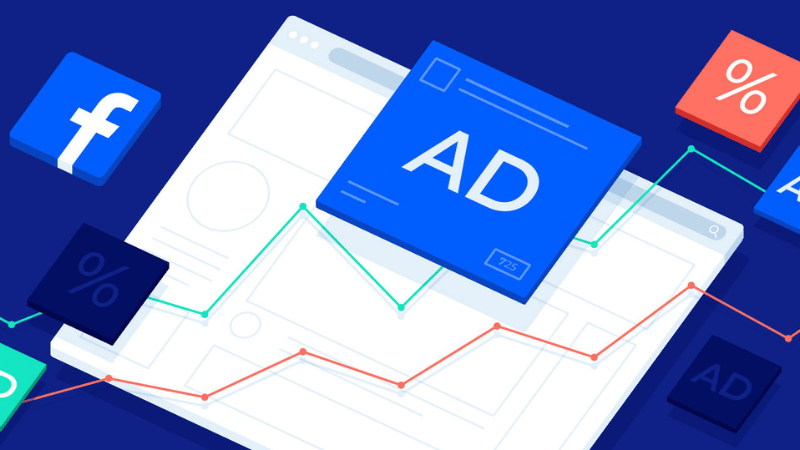
It is the process of improving the performance, visibility, and conversions while maximizing the Return on Investment (ROI) from your ads. Facebook advertising optimization focuses on adjusting targeting, bidding strategy, and distribution optimization. The goal is to improve the ad’s relevance, engagement level, and cost-effectiveness of the campaign.
For a successful Facebook Ads campaign, ad optimization is essential. By doing so, you can ensure your ads reach the right target audience, helping the campaign achieve the best effectiveness and optimize costs. Moreover, ad optimization helps increase the Click-Through Rate (CTR), reach a high-ROI audience, boost sales, etc.
Why is Facebook advertising optimization necessary?
The cost to launch a Facebook ads campaign to attract the target audience and increase orders is not small. Instead of spending a large amount of money to reach target customers and increase the conversion rate to sales, many businesses apply the Facebook advertising optimization method. With this approach, businesses can save a portion of the ad budget, optimize costs, and still ensure profitability.
Furthermore, ad optimization on Facebook helps enhance competitive advantage and expand the reach to the target audience for the business. By focusing on optimizing Facebook content, you create engaging ad content with eye-catching and high-quality images and videos to attract and impress target customers.
Through ad optimization, businesses can improve the performance of their Facebook Ads campaign. It also helps increase engagement, the conversion rate to sales, and maximize sales, along with Return on Ad Spend (ROAS). Ad optimization is a crucial part of any business’s development strategy.
Summary of an effective Facebook advertising optimization method
Choose the appropriate campaign objective
Before starting any ad campaign, the first thing to do is determine the campaign objective. This helps Facebook know what your ultimate goal is, so the algorithm can understand and optimize ad distribution for the best effectiveness.
Therefore, selecting the appropriate objective for the running Facebook advertising campaign is very important. Identifying the ad objective will help you select the correct Optimization for Ad Delivery during the campaign setup phase after setting the budget. Moreover, the objective is the compass guiding the entire campaign in the right direction. Additionally, it is one of the factors for evaluating campaign effectiveness for appropriate adjustments.
Optimize the target audience file
When optimizing Facebook advertising, you need to review the target audience group. This is one of the factors that most influence the effectiveness of Facebook ads. If you want to improve the effectiveness of your Facebook Ads campaign and optimize costs, you need to select the right target audience—those who are interested in your products or services—to reach target customers accurately.
Facebook Ads provides you with many targeting options based on criteria: location, demographics, interests, behavior, etc. Focus on researching the target audience and identifying the most potential group to reach target customers accurately. Understanding customers not only helps with precise targeting but also in creating suitable ad content.
Optimize ad content
Besides targeting, ad content is a factor that strongly impacts the effectiveness of the Facebook Ads campaign. Because appealing ad content can attract, retain customers, and drive conversions to sales, increasing revenue. You should dedicate time to optimizing the ad content on your Fanpage.
Do everything possible to make your ad post appealing and attract a large number of interactions. To achieve this, you must thoroughly research the characteristics, behavior, and demographic factors of the customer. Furthermore, you need to spend time researching the value that your products or services provide, as well as researching competitors.
Through that, create ad content that addresses the issues customers are facing and offers suitable solutions by using the products and services you provide. Also, provide persuasive reasons why customers should choose your brand.
When building ad content, focus on creating an appealing headline. You also need to concentrate on designing eye-catching and professional images or videos to attract customers. Add clear, persuasive Calls To Action (CTAs) to encourage customers to take the desired action, and include relevant topic hashtags to increase the visibility of the ad.
Use the FTO method
The FTO (Fast Take Off) strategy is a very good supporting tool for the Facebook advertising optimization campaign. Instead of waiting for campaign results for a long time before optimizing, this Facebook advertising optimization method accelerates the process and brings unexpected results.
Regarding how FTO works, when starting a new ad campaign, you need to set the daily budget and lifetime budget higher than the initial projected budget. Once your ad post has reached over 10,000 impressions, review and decide which elements to maintain and which to improve.
Moreover, you also need to reduce the budget back to align with the initial projected total budget. However, you need to wait 24 hours for these changes to take effect and impact the performance of the Facebook Ads campaign.
Use A/B Testing
By conducting A/B testing, you can compare different ad versions to find the creative that performs best. When performing A/B testing, prioritize factors that most impact CTR and conversion rate. These include: ad format, ad placement, Call To Action buttons, objectives, bidding strategy, etc.
To perform A/B testing, navigate to Facebook Ad Manager, then select the ad you want to test. Next, click Add and choose A/B Test, or you can use Facebook’s Testing Tool. However, you should not test too many ad factors at once.
Instead, test 2–3 highly differentiated variations to accurately conclude the testing results. You need to collect at least 100 conversions for each variation.
Optimize ad scheduling
Each customer group has different times for accessing Facebook and shopping. Depending on the target audience you are aiming for, you need to research the golden hours to run ads appropriately. Not only should you run ads during the golden hours, but you also need to research the weekly and monthly golden hours and determine what time to run Facebook ads to increase sales. This aims to display the ad at the right time, helping increase the interaction and conversion rate.
Optimize the Landing Page
You not only need to optimize ads but also the landing page to enhance ad effectiveness and optimize conversion costs. Ensure the landing page has an eye-catching interface and provides complete information about the advertised products and services. Additionally, ensure the landing page is mobile-friendly, has a fast loading speed, with clear, persuasive Calls To Action. Simultaneously, contact information should be available for customers to contact the business immediately after clicking the ad that redirects to the landing page.
Optimize ad placements
This is one of the effective Facebook advertising optimization methods. When running Facebook ads, the ad placement greatly affects the advertising cost. To select the most effective ad placement, you need to analyze the campaign by Placement in the Facebook Ad Manager report. If you want to optimize advertising costs, remove ads with ineffective placements. At the same time, increase the bid for the best-performing ad placements.
Set up automated optimization rules
This is a free feature available to anyone running Facebook ads. This optimization method helps you save time brainstorming new campaigns. Facebook will automatically optimize ads according to the following rules:
- Automatically turn off ad campaigns
- Send notifications to the ad manager
- Automatically adjust the budget (increase or decrease)
- Automatically adjust the bid (increase or decrease the bid by…)
To set up the automated rules, access Facebook Ad Manager. Next, select one or more campaigns, Ad Sets, or ads. Then click the Edit icon in the right menu and click the Create Rule button.
Note: You should set up email notifications to receive an overview report of automated changes within 24 hours to stay informed.
Exclude “Converted” users from the target audience
Another Facebook advertising optimization method to expand your campaign reach without changing the budget. Customers who have converted should be moved to the next stage of the marketing funnel and targeted with new messages. You can create a Custom Audience on Facebook of people who have visited specific websites and use the exclusion feature when setting up the ad campaign.
Through the Facebook advertising optimization method we have shared above, we hope you have learned more useful knowledge about running ads. We hope this information will help you improve campaign performance and effectively optimize advertising costs to increase ROI.
Frequently Asked Questions
Meta’s ad distribution system uses machine learning technology to optimize results. With one ad displayed, the distribution system learns more about the right audience to target, the time to display the ad, the ad placements, and the content to use. The more an ad is displayed, the better the distribution system can optimize ad effectiveness. An Ad Set ends the learning phase as soon as its performance stabilizes. That is when the Ad Set receives about 50 optimization events over 7 days.
To know when ad optimization on Facebook is needed, you need to regularly monitor valuable metrics to check campaign performance. Advertisers often monitor metrics in Facebook Ad Manager to make decisions.


