Lead generation plays a pivotal role in the sustainable growth of the financial services sector. To increase the customer base, it is first essential to ensure a sufficient volume of high-quality appointments; to achieve this, a steady source of leads is an indispensable factor. This is the core challenge that many financial firms are seeking to solve when deploying Facebook loan ads in an increasingly competitive landscape.
The question is not just “how to get more leads,” but how to generate a steady flow of high-quality leads that can be automated, measured for effectiveness, ensure profitability, and scale easily. For modern financial service models, especially when implementing Facebook loan ads, building a structured and highly predictable lead generation system has become a mandatory requirement, rather than relying on manual or unstable methods as in the past.
Challenges facing the financial services sector

The financial services sector is considered one of the industries with the highest barriers to marketing and business development. For years, most financial advisors relied on traditional methods such as personal referrals, networking events, seminars, cold calling, direct mail, or similar outreach. While these methods are not entirely ineffective, reality shows that their efficiency is significantly declining.
Compliance constraints in financial marketing
The first challenge, and also the biggest barrier, comes from compliance requirements. In financial services marketing, businesses are not allowed to make committed claims or guarantee results, especially regarding profits, returns, or zero-risk scenarios. This makes communication messages more cautious than in many other industries.
Many marketing teams view compliance as a “rigid cage” that stifles creativity. However, the essence of the problem is not about being restricted, but about not fully understanding the boundaries of what is permitted and what is forbidden. When regulations are mastered, businesses can build persuasive messages based on data, practical experience, and professional value, instead of absolute promises.
In the financial industry, this process is often lengthy and varies across organizations and markets. Without early planning, campaigns can easily fall behind schedule or miss ideal deployment windows. Therefore, creating content calendars weeks or even months in advance is nearly mandatory to ensure proactivity and synchronization between marketing and compliance departments.
Limited and unstable lead sources
Many firms still have leads, but the quantity is insufficient for scaling, or the lead quality is low and misaligned with the target segment. In more severe cases, the pipeline is nearly empty, relying entirely on personal referrals or existing relationships.
The cause often stems from focusing on a single channel. Relying only on organic sources like referrals, networking, or organic content makes growth rates very difficult to predict. Conversely, if only paid advertising is used without a strong content and brand foundation, the cost per lead will increase while conversion rates decrease.
A more effective solution is to combine two approaches: organic and paid. In-depth, educational content helps build credibility and nurture long-term trust, while paid advertising accelerates reach and expands coverage.
When these strategies are synchronized, businesses not only improve lead quantity but also enhance quality, as customers have been “warmed up” before entering the consultation phase.
Seminars and networking events
Seminars or networking sessions used to be the “primary weapon” for many financial advisors. Theoretically, these are ideal environments for relationship building and showcasing expertise. However, in practice, the cost and effort often do not match the results.
You must spend significant time on preparation, venue rental, organization, and communication, not to mention travel and staffing costs. Ultimately, the number of truly high-quality leads is often very limited. The conversion rate from attendees to paying clients is decreasing, especially as participants tend to “attend for information” rather than being ready to make a decision.
Manual outreach
Cold calling or reaching out to personal contacts provided certain results in the past. However, this is essentially a numbers game, requiring a lot of time and energy for every small opportunity.
Today, consumers are much more wary of unsolicited calls. Answer rates have dropped sharply, not to mention the willingness to listen or book an appointment. In the long run, this method is not only ineffective but also drains the team’s morale, especially for advisors who must perform the outreach themselves.
Long sales cycles and high trust requirements
The final challenge specific to financial services is the extended sales cycle. Unlike fast-moving consumer goods, financial service decisions directly involve the client’s assets, future, and financial security. Therefore, they rarely make a decision during the first contact.
This process requires patience and a structured, nurturing strategy. Clients need time to research, compare, and evaluate the provider’s professional competence and credibility. If a business fails to maintain a continuous presence during this stage, the risk of being replaced by a competitor is very high.
Due to the long cycle, leveraging automation becomes particularly important. CRM tools, email marketing, scheduling systems, and lead scoring help significantly reduce manual workloads while ensuring clients always receive relevant information at each stage.
However, automation does not mean being emotionless. In the financial industry, the human element remains central, and technology should only be seen as a supportive tool to enhance the experience, not to replace personal relationships entirely.
Solving the lead generation puzzle for financial services
To build a sustainable Facebook lead generation system in financial services, the most effective approach is to start with paid strategies to create initial traction, then gradually expand to free strategies to optimize costs and increase long-term durability. These two groups of strategies are not opposing but should be designed to complement and amplify each other within the same marketing ecosystem.

Starting with paid strategies to create growth momentum
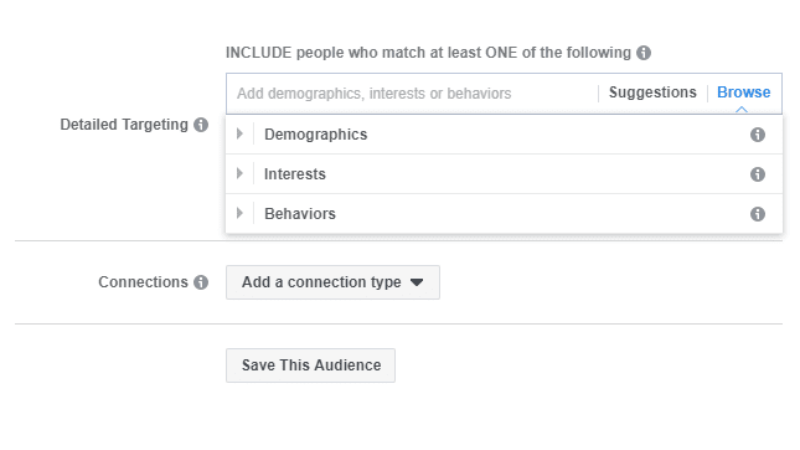
Among paid channels, Facebook advertising is a standout choice for the financial services sector, especially when the goal is to reach middle-aged and older demographics. This group is often interested in retirement planning, annuities, wealth management, and long-term financial decisions. The greatest advantage of Facebook Ads lies in its ability to target based on behaviors, interests, and the problems users are facing.
However, a common mistake is over-focusing on self-introduction. Messages like “I am a financial advisor, I help you plan for retirement” are often not persuasive enough to make users stop, click the ad, and proactively provide their information.
What truly triggers action is the specific problem they are worried about. It could be the fear of running out of money in old age, the pressure of maintaining income after retirement, or the desire to grow assets safely. When the ad hits the “pain point,” the conversion potential is significantly higher.
Designing a sales funnel to turn strangers into appointments
After a user clicks on an ad, the next decisive step is the sales funnel. Directing traffic straight to a general website or a booking page often results in low efficiency because the user hasn’t built enough trust to make a commitment. A call registration form right at the start is also not optimal if the user does not yet understand who you are and what value you provide.
A more effective solution is to build a funnel specifically designed for step-by-step conversion: from stranger to lead, from lead to appointment, and from client appointment. This funnel operates almost automatically, helping you accurately measure the cost per lead and per appointment.
Thanks to this, you can proactively forecast monthly growth. The strength of Facebook Ads is scalability:
- As the budget increases, the number of appointments increases.
- If the budget decreases, the system still operates stably at a lower level.
Shifting to free strategies for long-term cost optimization
Once there is a steady flow of leads from advertising, the next step is to invest seriously in free strategies to reduce dependence on paid budgets. The most important platform at this stage is the website.
A website is not just a place to introduce services, but also the first touchpoint where clients evaluate your credibility and expertise. An effective website needs to be fast-loading, secure, regularly updated, and SEO-optimized.
The website must simultaneously meet three objectives:
- Build credibility from the first few seconds
- Generate high-quality leads
- Provide a positive digital experience
Credibility can be built through testimonials, case studies, and real photos of the team. In the financial industry, the human element is key, so clearly showing who you are and who you have helped is indispensable.
Lead magnets and nurturing content in the marketing funnel
A strong website needs to be supported by high-quality lead magnets. A lead magnet is valuable content you provide in exchange for the user’s contact information, usually an email. This could be an ebook, an in-depth guide, a risk calculation tool, or a checklist related to financial planning. Most importantly, this content must demonstrate genuine expertise, not just general information.
In the marketing funnel, content should be distributed across three stages: Awareness, Consideration, and Decision. In the Awareness stage, the goal is to grab attention. In the Consideration stage, you need to maintain engagement through emails, newsletters, videos, or case studies. By the Decision stage, high-conversion content, such as a free consultation or a strategy session, will play a pivotal role.
Multi-channel marketing and compliance
For a lead system to be truly sustainable, multi-channel marketing is essential. A consistent appearance across multiple platforms makes the brand more familiar and trustworthy. Paid ads act as an accelerator, SEO and content serve as the foundation, and retargeting optimizes conversions at every stage.
Throughout this process, compliance is always a mandatory condition. Messages must focus on facts and avoid any guaranteed commitments. The financial industry often falls under Meta’s Special Ad Category, meaning there are additional restrictions on content and targeting.
When you understand and do it right from the beginning, you not only reduce risk but also build a high-quality lead generation system that is scalable and predictable for growth over time.
Frequently Asked Questions
Experts should not filter using targeting techniques but rather through content and form barriers. Use deep technical terms in your articles to self-exclude those who are not knowledgeable. Additionally, add screening questions to the Instant Form (e.g., “What is your current credit limit?”). People willing to answer detailed questions are usually those with serious needs and transparent profiles.
Do not rely solely on “Last-click” metrics. Experts should implement Server-side Tracking and multi-channel attribution models. A lead might see an ad on Facebook, research via LinkedIn, and finally fill out a form on Google. Capturing this entire journey helps you know which channel acts as the “hook” and which acts as the “closer,” avoiding the mistake of cutting off important supporting campaigns.


