Many advertisers still lean toward “aggressive” strategies, such as using before-and-after images, sensitive messaging, or attention-grabbing gimmicks. However, this is precisely the type of content prohibited by Facebook. Even in challenging niches like male sexual health, many brands successfully deploy effective campaigns by strictly adhering to policies, facing almost no rejections or account bans.
A recurring question we hear from advertisers is: “Why is my CPM so high? Why are conversion and acquisition costs becoming so expensive?” Many immediately blame the ad account, assuming poor account quality is the cause. In reality, this is a common misconception. High costs typically stem from campaign structure, creatives, and optimization strategies, rather than the account itself.
As business owners’ ad accounts face frequent restrictions or disablement, agency accounts are becoming a highly sought-after solution. In this article, Optimal Agency will guide you through the simplest, safest, and most effective ways to set up a Facebook Ads Agency account in 2026.
Facebook ads agency accounts for beginners
When first starting with Facebook Ads, you likely hear about “agency accounts” without fully grasping their nature, why they are highly valued, or whether a beginner should use one. Before diving into the “how-to,” we want to help you build a solid foundational understanding.
What is a Facebook agency account? Where does it come from?
Facebook Agency accounts are managed by agencies with Meta Business Partner status (High-Level Partners). You can verify these agencies through the Meta Partner Directory. These are not small individual entities but established organizations with high spending volumes, long-standing operations, and the ability to meet Meta’s stringent criteria.
Consequently, agency accounts receive significantly better support than standard business owner accounts. For instance, when an issue arises, agencies have direct communication channels with Meta Partner Managers instead of just submitting tickets and waiting for automated responses. This provides a higher layer of stability and better scalability in the long term.
Why are business owner accounts frequently banned?
Many advertisers wonder why business owner accounts are so prone to being banned, especially during the initial phase or when starting to scale. The core reason lies in the ‘trust’ factor.
When you first create an ad account and begin spending, Meta requires time to establish a trust score for that account. Initially, the account may run smoothly with small budgets. However, as you rapidly scale the budget, launch multiple campaigns, or enter sensitive niches, the system is highly likely to trigger automated security checks. At this point, even a single false flag or a minor policy violation can lead to the account being restricted or disabled immediately.
The biggest issue is that most business owners do not know the exact reason for the ban. When they create new accounts to restart, they often repeat the same mistakes, leading to a continuous cycle of bans. This loop causes many advertisers to lose time, valuable data, and the opportunity to scale.
The key difference of agency accounts
With an agency account, the situation is completely different when you work with a strong and reputable agency. In cases where an account is disabled due to a false flag, the agency can proactively file an appeal with Meta, with a significantly higher recovery rate. This helps ensure that campaigns are not disrupted for too long, which is especially critical for advertisers running large budgets.
If the account is genuinely in violation, the agency is usually still able to clearly identify the root cause. They can pinpoint exactly which content is violating policies, which setup needs to be adjusted, or which creatives should be optimized so you can continue scaling safely. For example, instead of continuing to run sensitive messaging in the health niche, they may recommend shifting to an educational angle, indirect testimonials, or more neutral content while still maintaining conversion performance.
Should you really use a Facebook Ads agency account?
Before deciding to use a Facebook Ads Agency account, we believe you should clearly understand both the advantages and limitations of this model. For many advertisers, especially those scaling aggressively, an agency account can be a powerful “growth lever.” However, if used at the wrong time or through the wrong provider, it can also become a burden of unnecessary costs and risks. Below, we will provide a detailed analysis to help you evaluate whether an agency account is truly the right fit for you.

Biggest advantage: Scaling ads easier and safer
The most obvious plus of an agency account is its scalability. For advertisers in dropshipping, eCommerce, services, or digital products, a typical scenario involves testing ads at $50 to $100 per day. When an effective creative or offer is found and you want to push the budget to $500 or $1,000 per day, personal accounts are highly prone to sudden Facebook restrictions or audits.
We have encountered this situation many times, especially when scaling dropshipping stores. While ads are performing well, the account “slams on the brakes,” spending stops, and revenue plummets instantly. With an agency account, this risk is generally lower due to higher trust scores and a strong spending history.
Suitable for high-risk niches
If you are running ads in sensitive sectors such as healthcare, Meta crypto ads, finance, or certain borderline policy offers, an agency account is almost a mandatory choice. We once worked with a client in the healthcare sector; while using a personal ad account, the account was restricted very quickly. After switching to an agency account, the campaign ran stably for 2 to 3 consecutive months without any major issues.
For advertisers in high-risk niches, an agency account is not “absolute insurance,” but it is certainly a much safer solution than self-created accounts.
Vital stability for business
For a growing business, stability is as important as profit. No one wants to wake up and find their ad account restricted, the entire campaign halted, and revenue at zero.
Agency accounts are typically centrally managed with rapid incident response protocols. This helps minimize ad delivery disruptions and gives advertisers peace of mind for long-term scaling.
No limit on the number of ad accounts
When using a personal Business Manager (BM), you will soon hit a limit. Once an ad account is restricted, the “Create New Account” button is often grayed out. The only way is to create a new BM, yet each Facebook profile can only create a maximum of two BMs.
With an agency account, the story is completely different. Advertisers can be shared multiple ad accounts without any quantity limits. This is extremely useful if you want to scale horizontally, testing multiple offers or markets simultaneously.
Priority support from Facebook
Large agencies spend tens or even hundreds of millions of dollars annually on Facebook Ads. Therefore, they often have access to Facebook Insiders or priority support channels. When a specific issue occurs, the likelihood of receiving a fast response and resolution is much higher than with a standard personal account. Agency accounts help advertisers maximize the benefits of Facebook Ads while mitigating many common risks when scaling.
How to set up a Facebook agency account in simple 2026
To run stable ads for dropshipping, cryptocurrency, or difficult niches in 2026, setting up your Facebook agency account correctly from the start is crucial. Below is our step-by-step guide:
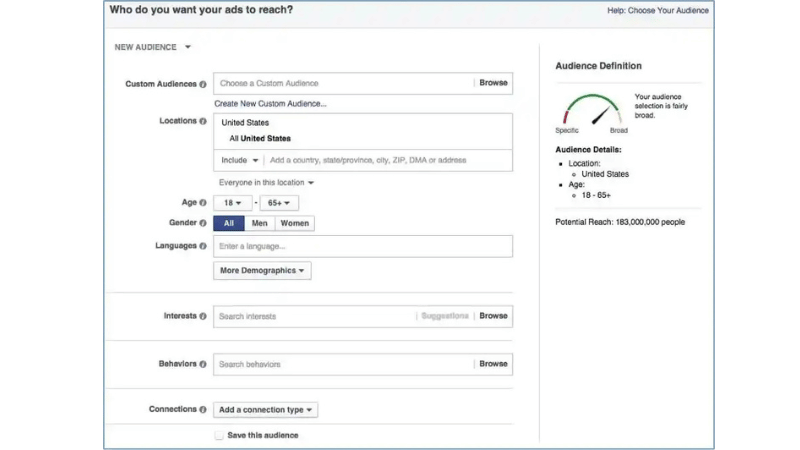
Obtaining a Facebook agency account
First, we need a Facebook Agency account to get started. There are currently two common ways to obtain one:
- Self-create an Agency Account: With this method, your business must register for Meta Partnership programs within Business Manager. Each program entails specific requirements regarding legal documentation, ad spend thresholds, advertising history, and policy compliance levels. For instance, if you are an agency with substantial historical spend and a diverse client portfolio, your chances of approval will be significantly higher.
- Rent a Facebook Agency Account from a reputable provider: This is the preferred choice for many professional advertisers as it is highly time-efficient. Instead of waiting for Facebook to audit your Business Manager, you can launch ads immediately using accounts that already possess a high trust score. Reputable rental providers typically operate their accounts in strict accordance with policies, effectively mitigating the risks of account bans, payment suspensions, or spending limits.
Adding assets to the agency account
After obtaining an agency account, the next step is to add all of your advertising assets—such as Fanpages, ad accounts, Instagram, and WhatsApp—into the system for centralized management. Go to Ads Manager, select All Tools from the left-hand menu, then access Business Settings. Here, Facebook will display a wide range of categories that you can configure according to your specific needs.
How to add a Facebook page
To add a Fanpage to your agency account, navigate to the Pages section and click Add. There are three common scenarios:
- If you do not have a Fanpage yet: Select Create a New Facebook Page and follow the instructions.
- If the Fanpage already exists and you own it: Select Add a Page, then select the specific page and confirm.
- If you are an agency running ads for a client and do not own the Fanpage: Select Request Access to a Page. This method allows you to run ads and manage content without transferring ownership, ensuring security for both parties.
Adding ad accounts
Next, advertisers need to add ad accounts to the agency system. In the Ad Accounts section, click Add and choose:
- Create a new ad account if you have never run ads before.
- You can add an ad account if you already have one. In this case, simply enter the Ad Account ID to link it to the agency system.
Additionally, we encourage you to connect Instagram and WhatsApp accounts. For instance, in dropshipping or crypto niches, driving traffic to Instagram or initiating WhatsApp chats often yields higher conversion rates compared to using a Fanpage alone.
Assigning permissions to team members
The final but equally important step is assigning permissions to your team. This ensures effective team management and mitigates the risk of operational errors. Navigate to the People section, click Invite People, and enter the member’s email address. Next, select the appropriate role, such as Admin, Editor, Analyst, or Partial Access. Then, assign specific assets they are permitted to manage, such as Fanpages or Ad Accounts.
Once completed, the member will receive an invitation via email or a direct Facebook notification. After a few minutes of confirmation, they can begin working within the agency account. Correct initial setup will help advertisers run Facebook Ads more stably, scale easier, and minimize unnecessary risks in 2026.
Setting up a Facebook agency account properly in 2026 not only saves time but also creates a solid foundation for stable advertising and long-term scaling. By understanding every step—from account selection and asset integration to team delegation—the entire process becomes transparent and manageable. Whether you are in dropshipping, cryptocurrency, or any other niche, a professionally configured agency account will help you reduce risk, optimize performance, and focus entirely on revenue growth.
Frequently Asked Questions
Fees vary depending on the specific agency providing the rental service. Typically, the fee is calculated based on a percentage (%) of the ad spend and the complexity of the campaign. Additionally, other factors such as the specific industry or niche can influence the total cost.
The difference lies in ownership and access control. While a personal ad account is tied to an individual Facebook profile, an agency account is created by Meta Business Partners. Personal accounts are controlled by individuals, whereas agency accounts are managed by professional advertising firms. Facebook agency accounts offer significantly higher spending limits and superior stability.


