Finding a viral dropshipping winning product is rare, but watching that product trend die because Facebook chokes your daily spend at $50 is a financial tragedy. You have scaled your Shopify store infrastructure, aligned your suppliers, and your initial ad sets are returning a massive 4.0 ROAS. You confidently duplicate your winning campaigns to inject $2,000 and capture the market—only to realize Meta’s risk algorithm has locked your daily spend capacity. Your budget sits frozen, your competitors duplicate your exact video hooks, and your scaling window slams shut.
This artificial budget ceiling is not a glitch; it is Meta’s automated Risk-Velocity Throttling mechanism designed to audit unverified cross-border retail assets. If you are trapped in this learning loop and need to discover how to overcome daily spend limit dropshipping restrictions immediately, you must move past basic business verification hacks. This enterprise-level documentation exposes the backend mechanics of Meta’s account tiers, reveals how to eliminate automated velocity holds, and outlines the precise frameworks to scale your e-commerce funnels to $10,000+ daily with Facebook dropshipping ads without delay.
The Financial Risk Grid: Why Meta Chokes Fresh Dropshipping Accounts
Meta’s 2026 accounting infrastructure relies on automated data processing models to score the credit risk of every advertising node. When a newly registered ad profile or a fresh Business Manager (BM) enters the auction system, it is automatically assigned to a low-trust risk tier.
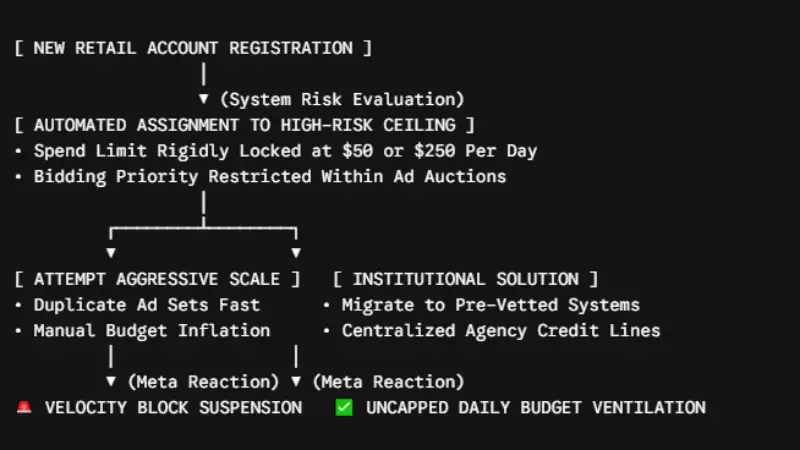
The system locks your budget at a $50 or $250 ceiling to defend its networks against payment defaults and temporary storefront operations. Meta’s automated filters assume that an unverified profile attempting a rapid funding scale may fail to fulfill international customer orders, leading to high chargeback rates. Attempting to force manual budget expansion by copying ad sets too quickly triggers a high-risk velocity flag, causing immediate administrative profile freezes instead of expanding your delivery scope.
Technical Profile Warming: Accelerating the Organic Limit Expansion
For internal media buying teams looking to raise spending thresholds organically, standard manual budget adjustments are ineffective. You must systematically demonstrate account financial stability over precise monitoring cycles to train the platform’s risk ledger:
- The Initial 7-Day Billing Run: During the opening week, maintain an unchanging, continuous daily spend exactly 5% below your current cap (e.g., set budgets to $45 if capped at $50). Never allow a single payment decline; set up automated secondary backup corporate credit instruments to clear invoices instantly.
- The Settlement Cycle Optimization: Meta scales limits based on invoice volume, not just the total dollar amount spent. Force the system to clear smaller billing thresholds rapidly by initiating manual settlement requests inside your billing manager every 12 hours.
- Pixel Event Verification Alignment: Ensure your server-side Conversions API (CAPI) continuously broadcasts clean checkout events with high data match scores. When Meta’s risk bot tracks high-value conversion data matching valid logistics pipelines, it accelerates your account’s trust progression, lifting spend caps within 10 to 14 days.
Structural Pod Isolation: Eradicating Cross-Contamination Triggers

A common structural failure when attempting to expand dropshipping spend velocity is running multiple testing campaigns from different store domains inside a single business workspace. If one storefront faces a page block or a spending restriction, Meta’s network analysis tools map the shared asset indicators, creating a cascading ban across your entire system.
To protect your continuous traffic pipelines, your tech department must implement a strict, isolated asset pod environment. Each independent online store brand must operate on an independent asset track: one dedicated anti-detect browser station, one unique static residential ISP proxy connection, and one isolated business manager setup that shares no tracking assets or pixels with external fallback configurations. If an operational node encounters a budget throttle, the surrounding assets remain completely insulated.
The Institutional Apex: Shifting to Whitelisted Corporate Tier Frameworks
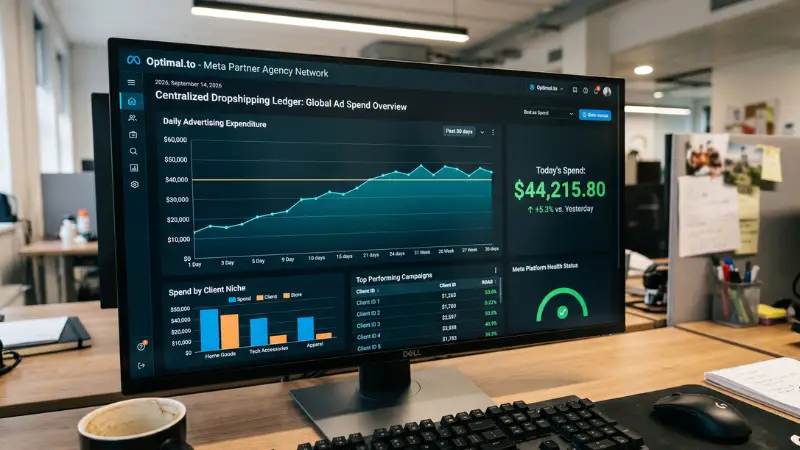
While executing technical profile warming and structured pod isolation secures local device fingerprints from hardware checkpoint locks, waiting weeks for Meta to organically lift daily spending limits means losing valuable product trend momentum. In the fast-moving cross-border retail sector, true scalability requires elite corporate infrastructure.
The definitive strategy deployed by high-volume e-commerce marketing groups involves bypassing retail constraints entirely by choosing to rent a Facebook ad account corporate setups managed by verified Meta partner networks like Optimal.to.
Transitioning your team’s spend to this elite corporate layer eliminates capital constraints through three critical operational upgrades:
- Pre-Established Algorithmic Trust Scores: Accounts provided by Optimal.to are deeply integrated under legacy corporate Business Managers that process millions of dollars in continuous ad expenditures. This pre-existing trust shields the associated ad nodes from automated velocity holds, letting your team spend $5,000, $20,000, or over $50,000+ daily from hour one.
- Stable CPMs During Spend Scaling: Standard accounts face fluctuating Cost Per Mille (CPM) rates during budget spikes because the system treats the velocity shift as unverified. Rented corporate logs benefit from the parent agency’s established auction priority, securing steady, predictable ad delivery costs even during maximum budget expansion.
- 15-Minute Asset Hot-Swap Redundancy: Working with an institutional partner protects your operational balance sheet. If a macro platform update flags an active account or page node, the expert technical division at Optimal.to executes an immediate hot-swap protocol—safely recovering your remaining capital balances via backend API lines and transferring 100% of your funds to a fresh corporate account within 15 minutes, maintaining your conversion velocity.
Frequently Asked Questions
Business verification only validates your legal entity existence; it does not change your account’s operational risk scoring. Meta’s automated ledger requires active, non-defaulting transaction history on the specific advertising node before expanding daily spend thresholds.
Yes, but it is highly risky. If the capped account is suspended for policy non-compliance, the shared pixel relationship creates a direct technical contamination footprint, which can cause immediate automated spend chokes on the receiving uncapped account.


