The gap between Facebook’s massive user base and the modest organic reach held by most brands is not a matter of chance, but a direct result of the platform’s content distribution strategy. The Facebook algorithm consistently prioritizes specific content behaviors, and as we head into 2026, evaluation and distribution principles have continued to tighten, focusing heavily on engagement quality and genuine value for the viewer. Finding how to increase views on Facebook for free no longer lies in posting frequently or chasing short-term trends; it requires systematic thinking. This article focuses on analyzing core factors to help you approach the right how to increase views on Facebook for free in 2026, based on actual distribution mechanisms, user behavior, and the latest algorithmic Facebook changes, rather than fragmented, unsustainable tips.
How Facebook distributes content to target users
Facebook does not display content randomly or chronologically by post time. Every post, video, or Reel must pass through a multi-layered evaluation process before a decision is made to further expand its reach.
Testing on an initial viewer group
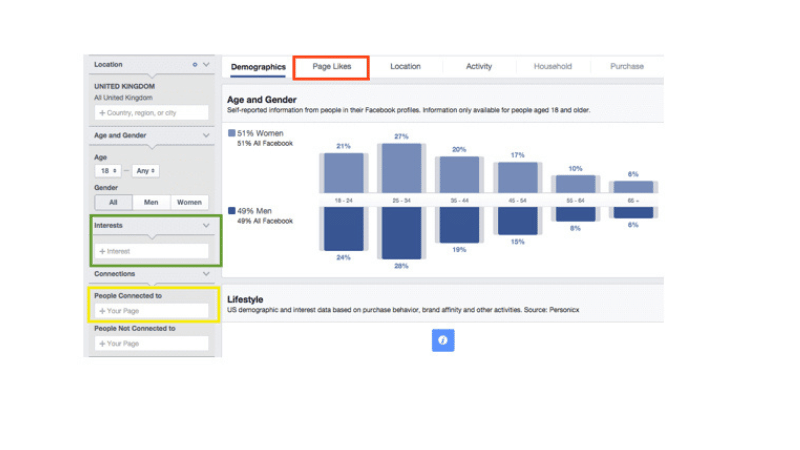
Immediately after the content is published, Facebook does not deliver the post to all followers. The algorithm selects a small user group, typically those with a recent history of interacting with your Page or personal profile, to test initial reactions. This is a critical screening step to determine the actual quality of the content.
During this phase, Facebook specifically monitors behavioral signals such as:
- Dwell time on the post or video.
- Video completion rate
- Proactive engagement (comments, shares, saves)
- Deep engagement levels, rather than just quick likes
If the initial viewer group responds positively, the content is deemed valuable and qualifies for the next round of distribution. Conversely, the post will quickly face restricted visibility, even if the Page has a large following. You can apply this strategy to increase views on Facebook Reels.
Evaluating relevance between content and users
The algorithm looks beyond surface-level topics, cross-referencing with the viewer’s past content consumption behavior. Facebook builds interest profiles based on several factors:
- Content the user frequently watches or interacts with
- Their preferred formats (short-form video, long-form video, text posts, images)
- Their frequency and timing of activity on the platform
- The relationship between the user and the content publisher
The same post will have different visibility ranges across different audience segments. The more content focuses on a clear, consistent topic, the higher the probability of it being distributed to the right target user group. Pages that post scattered content lacking a thematic direction often struggle to expand organic views.
The role of quality engagement in expanding distribution
Not all engagement holds equal value. Facebook increasingly prioritizes actions indicating that users are truly interested, rather than superficial reactions. A post with fewer likes but many discussion-based comments will be rated higher than a post with many likes that fails to generate a conversation.
Signals valued by Facebook include:
- Meaningful comments, not single emojis
- Discussion threads between multiple users
- Shares accompanied by personal opinions
- High average watch time for videos
Content that stimulates users to respond with thoughts, experiences, or questions is typically favored by the algorithm for expanded reach. This explains why educational, professional analysis, or problem-solving content often maintains steady views over long periods.
The impact of content format on distribution potential
Facebook does not treat all formats with absolute equality. In each phase, the platform prioritizes content types that align with user retention goals. In recent years, short-form videos and Reels have been pushed due to their ability to generate continuous watch time.
However, this does not mean other formats have lost value. The algorithm still distributes them heavily if the content meets the target user’s behavior. For example:
- Long-form videos with high retention are distributed deeply among loyal audiences.
- Text posts that generate discussion can go viral within professional communities.
- Images with clear messages remain effective if they fit the viewer’s quick-consumption habits.
The issue lies not in the format itself, but in the fit between content, audience, and the viewer’s context of using Facebook.
Consistency and the Page’s distribution history
Facebook does not evaluate content in total isolation. The activity history of a Page or personal account directly affects future distribution potential. Pages that maintain stable content, have a clear theme, and regularly generate quality engagement gain more “trust” from the algorithm.
This trust manifests through:
- The ability for new content to be distributed faster
- A wider initial testing pool
- Longer visibility duration compared to the average content.
Conversely, Pages that have previously posted violating content, misleading content, or consistently have low engagement rates will face restricted distribution, even if the quality of subsequent posts improves. Facebook distributes content based on data, behavior, and trust accumulated over time. By understanding these evaluation layers, content creators can proactively adjust their publishing strategy, from thematic implementation and format selection to engagement triggers, to increase organic views in a controlled and sustainable manner.
Below is the complete article according to the requirements for length, style, and structure:
Implementation strategy to expand organic Facebook views
To increase organic views on Facebook, one must first recognize the reality that the algorithm does not distribute content randomly. Every posting behavior must meet certain conditions to be deemed worthy of display by the system.
Removing account restrictions
Before discussing content or posting times, checking the account status is a step that cannot be skipped. Facebook has a separate distribution control system for each profile, and even a minor violation is enough to significantly narrow reach without the user realizing it.
Through the Profile Status section, Facebook clearly displays the account’s condition. When there are no issues, a “No restrictions” notification means content is distributed according to the normal mechanism. Conversely, if restrictions appear, the system will specify the cause and the corresponding resolution.
In many cases, restrictions stem from behavioral signals like flagged comments, reported content, or interacting with posts that violate Community Standards. When the reason is unjustified, users can fully submit an appeal. Practice shows that many accounts are restored after just a few hours if Facebook confirms no serious violation occurred.
Some restrictions require specific actions, such as deleting content or editing violating details. Additionally, there are time-based restrictions, usually lasting 24 to 72 hours, which are automatically removed. In any case, ensuring a “clean” account is a prerequisite for content to have a chance to return to the organic distribution flow.
Posting original content
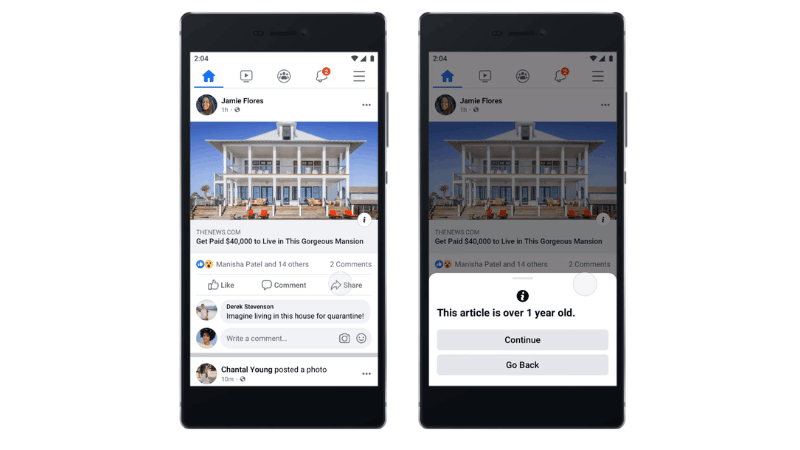
Facebook is increasingly tightening its evaluation of content originality. Unoriginal content is not just limited to copying from others but also includes repurposing videos or images that have appeared on other platforms like TikTok or YouTube Shorts.
Facebook’s recognition mechanism is capable of cross-platform data matching. When content is detected as having been posted elsewhere, the system sharply reduces distribution potential, regardless of content quality. This explains why many high-quality videos have unusually low view counts.
In contrast, content created specifically for Facebook often receives more positive signals. Not just Reels, but also text posts, images, and livestreams are highly rated when they carry a clear personal touch. Rotating multiple formats helps the profile maintain a natural activity status, preventing the system from viewing the behavior as repetitive.
For those who own a Facebook Group, posting directly within the group offers a major advantage. Facebook prioritizes Groups as community spaces, and exclusive content here often has higher visibility rates compared to content reposted from a personal profile.
Making the profile “Recommendable”
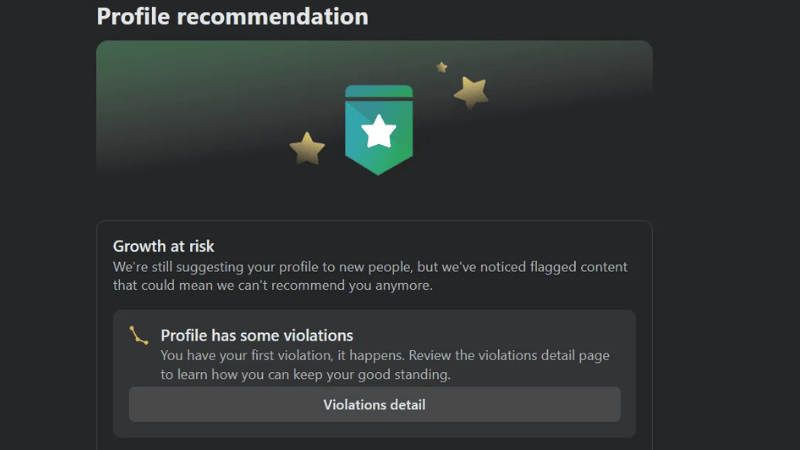
Facebook uses the concept of Recommendable to evaluate a profile’s potential for recommendation. When this status is achieved, content is no longer limited to the friends list but expanded outside the current network.
Specifically, posts can appear on the feeds of strangers, profiles can be suggested in “People you may know,” and relevant Groups can be recommended to suitable users. This creates a continuous organic growth effect without advertising costs.
To reach recommendable status, a profile needs to show stable credibility: clear personal information, a regular posting history, natural interaction, and no Community Standards violations. When these signals are maintained, Facebook automatically views the profile as a valuable entity within the content ecosystem.
Posting content at the right time
Posting time is a factor often overlooked, yet it directly influences the algorithm’s initial distribution decision. User behavior data shows that peak activity usually falls in the morning and at the beginning of the week, particularly Monday, Tuesday, and Wednesday.
Posting content according to the target audience’s time zone helps Facebook collect enough engagement signals during the initial phase. When a post receives early positive feedback, the system has a basis to expand its visibility.
Conversely, posting when users are less active prevents the content from gaining the necessary signals, causing distribution to stop early. Therefore, choosing a suitable time slot should not be based on intuition but on the actual behavior of the viewers you are targeting.
Frequently Asked Questions
Not necessarily. Facebook does not evaluate engagement by absolute quantity, but by the quality and structure of the interaction. Quick likes or short comments lacking context from the same group of acquaintances hold lower value than diverse, natural interactions from different user clusters. Additionally, Facebook is particularly interested in watch time and post-watch behavior. If users finish watching and stay on the platform, engage further, or share that content is evaluated more positively. Therefore, increasing organic views cannot rely solely on “engagement baiting” but must create a chain of behaviors beneficial to the distribution system.
No. Organic views are merely a distribution metric, not a business efficiency metric. Content can reach hundreds of thousands of views without generating any clear conversion or brand value. In many cases, chasing views causes content to drift away from the valuable user segment, leading to surface-level growth but a decline in audience quality. Sustainable organic growth is only truly meaningful when views come from the right group of people likely to continue interacting, following, and remembering the brand.


